Tree Removal in Garden City, GA
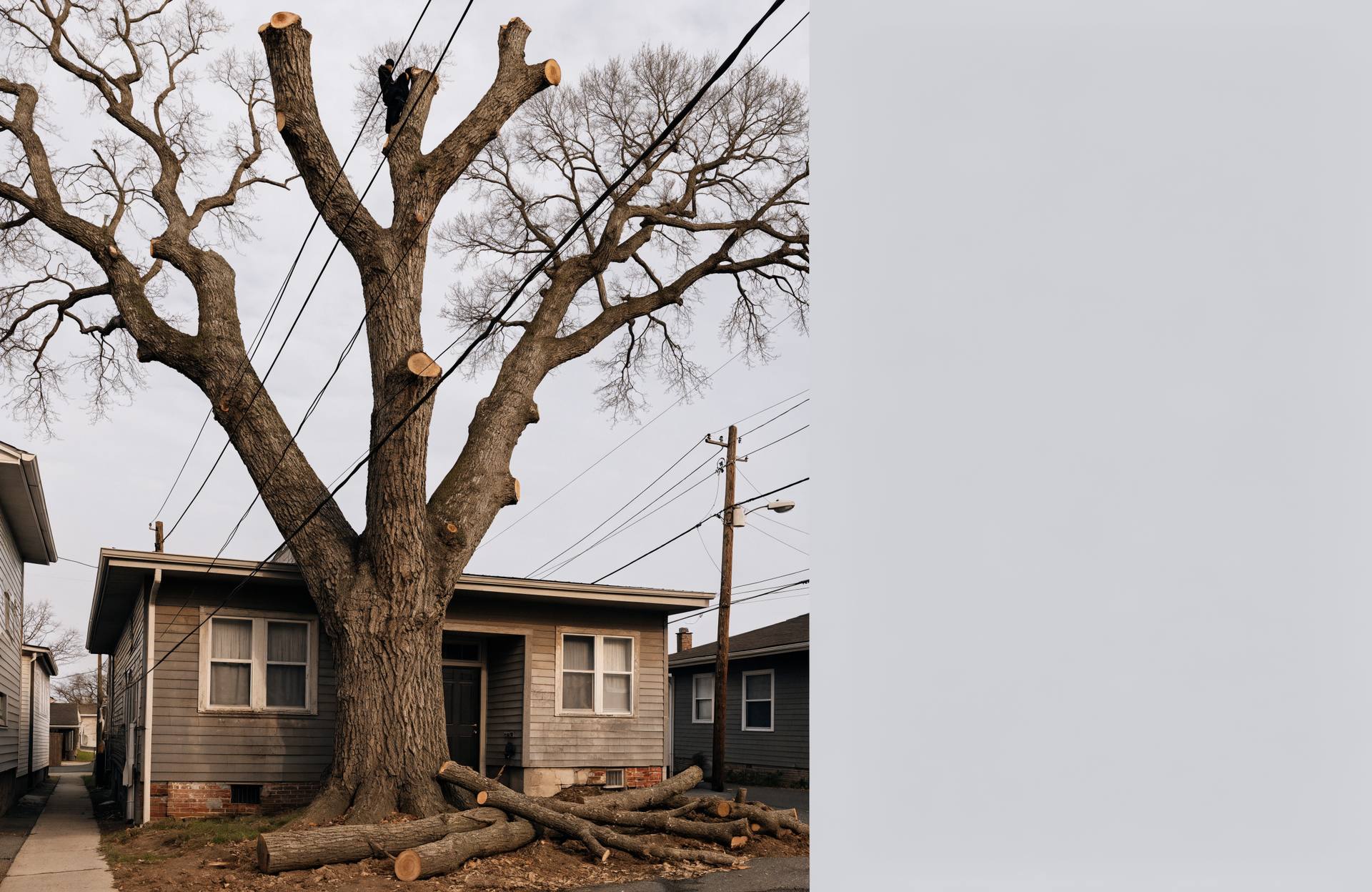
Older neighborhoods, older trees, and lots that leave nowhere to drop anything. Most of this work is climbed and lowered piece by piece.
Call or text anytime. If we miss you, we’ll call you right back.
Get a Free Estimate
Tell us whether there is side access to the backyard, and how wide the gate is.
- Licensed & Insured
- Residential & Commercial
- Free On-Site Estimate
- Debris Hauled Away
Garden City sits between us and the river, and it is an older town than the subdivisions west of it. That single fact drives most of the tree work here. The houses went up decades before the newer developments, the trees that shade them went in around the same time, and a lot of those trees are now reaching the end of what they were ever going to give. This page is about tree removal specifically. Our other services cover Garden City too.
An Older Canopy Than the Towns Around It
Newer Pooler and Port Wentworth neighborhoods mostly have builder-left pines and young planted trees. Garden City has mature shade trees in established front yards, which is a nicer street to drive down and a harder tree bill to carry. Big established trees sit closer to houses that were built when lots were laid out tighter, and they have had fifty or sixty years to grow into rooflines, driveways, and the overhead lines along the street.
Water Oaks and Laurel Oaks at the End of Their Run
These two species are the story of tree work in Garden City. Both were planted heavily across the coastal South because they grow fast and throw shade quickly. The trade-off is that neither is long-lived, and both are notorious for hollowing out from the inside while the canopy above still looks perfectly healthy. A water oak can carry a full head of green leaves on a trunk with very little sound wood left holding it up.
Because a whole street's worth of them went in around the same time, they also tend to reach that stage around the same time, which is why it can feel like everything on the block is failing at once. What we look for is mushroom conks at the base or on the trunk, a soft or punky spot near a root flare, bark falling away in plates, and dieback starting at the top of the canopy rather than the bottom. Any of those is worth a look before a storm makes the decision.
We often have to work from the street
A lot of Garden City lots have no side access wide enough for equipment, and some have no driveway to speak of. That means staging the chipper and the truck at the curb and moving everything out by hand or by rope. It is slower, and it is the honest reason a backyard tree here costs more than the same tree in an open yard. It also means we may need a lane for part of the day, so we would rather tell you that when we quote it than surprise you and your neighbors on the morning.
Low Ground and What It Does to Root Plates
Garden City sits low, close to the river and the marsh, with a network of ditches and drainage running through it. Ground that holds water gives roots less to grip, so a big tree that has stood through decades of storms can move in a season that is wetter than usual. On the low blocks we pay particular attention to the base of a tree, looking for soil heaving or a crack opening on the side opposite a lean, which says the root plate has started to lift. That is not a wait-and-see situation.
Commercial and Industrial Work
Garden City is not only houses. There is a great deal of industrial and logistics property here, and the tree work that goes with it looks different: sight-line clearing at entrances, limbs over truck routes and yards, and removals along fence lines and drainage easements. We quote commercial and multi-property work the same way, on site and in writing, and we can schedule around operating hours so a crew is not in the way of a shift change.
Getting There
Garden City is roughly ten minutes east of us. That is close enough that emergency work after a storm is practical, though the same narrow-street access that slows a scheduled job slows an emergency one too.
Tree Removal in Garden City
Why does it feel like every old oak on my street is failing at once?
Because they probably went in at once. Water oaks and laurel oaks were planted heavily across these neighborhoods when the houses were built, they grow fast, and they are not long-lived. A street planted in the same decade reaches the same stage in the same decade. It is not a disease sweeping the block, it is a cohort of fast-growing trees arriving at the end of their span together.
You cannot get down the side of my house. Can you still do it?
Yes. Where there is no side access we stage at the curb and bring material out by hand or on ropes, and the tree comes down in smaller pieces than it otherwise would. It takes longer, which is reflected in the price, but a backyard with no vehicle access is normal work here rather than a problem. Tell us the gate width when you call, since that decides what can go through.
Do you take on commercial and industrial property?
Yes. Alongside residential work we handle sight-line clearing at entrances, limbs over truck routes and yards, and removals along fence lines and drainage easements. Commercial jobs are quoted on site and in writing like any other, and we can work around operating hours so the crew is not in the way during a shift change.
Other Towns We Cover
Free Estimate in Garden City
Send a photo of the tree and one of the base. Licensed, insured, and the debris leaves with us.
Call or text anytime. If we miss you, we’ll call you right back.